Dozens of students forced to relocate after they say mold found in university dorm
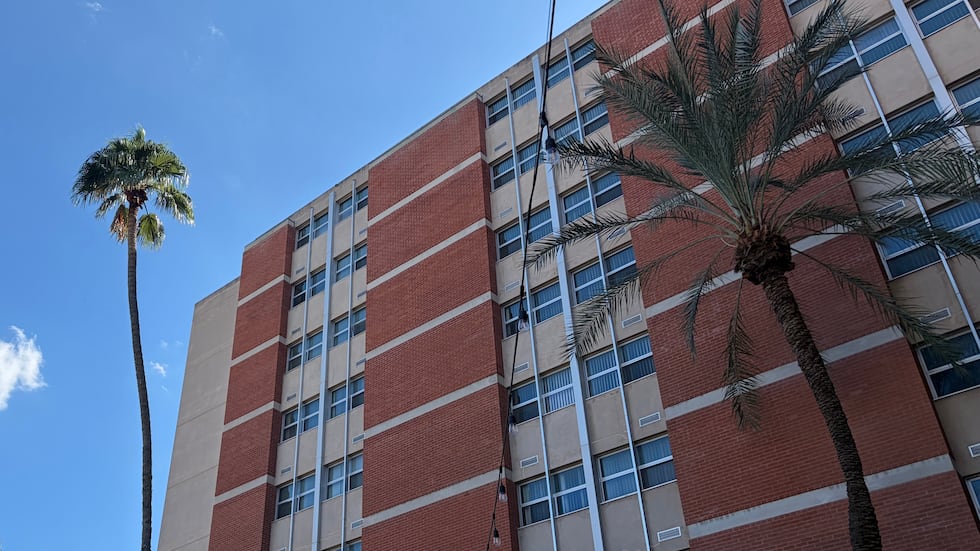
TUCSON, Ariz. (KOLD/Gray News) - A mold outbreak has recently forced dozens of students to move out of a University of Arizona dorm.
Lily Kingsbury and Ryleigh Beitler, both freshmen at the university, said they felt something was wrong shortly after moving into the Coronado Dorm.
“Everybody was like continuously sick on our floor, and when we saw these spots in the bathroom we were like, well it definitely looks like mold,” Kingsbury said.
The students ran a mold culture test and called maintenance after getting alarming results.
“Maintenance came in there and looked at everything, and then after they checked their rooms, they were checking our rooms, our neighbor’s room, like kind of just the whole hall, and it turned out there was a mold infestation,” Beitler said.
Two hours later, students said they received an email telling them to move out immediately because of repairs needing to take place in their room.
It was unclear how many students received that message, but KOLD said they spoke with at least a dozen students who were told to relocate.
Other students affected
Cate Schneider, a freshman who lives on a different floor, also moved out Friday.
“I’m just kind of like upset because I feel like the dorm and the school are like focused more on like other things than like actual health issues,” Schneider said.
Schneider added that she had been sick for months. She also said that she didn’t receive any communication from the university about her relocation and instead learned about it through word of mouth.
Schneider’s mother, Suzanne English, called the situation disappointing.
“I’m upset because when you drop your kids off at college or take them to college, the last thing you expect is to have them in an unsafe environment in the dorm where they should feel safe,” English said.
On Friday, Coronado Dorm residents said they received an additional email from the university confirming that localized areas of microbial growth were identified near a window.
The email stated there was “no indication of a systemic mold issue or other indoor environmental quality concerns.”
However, Beitler said she still has questions.
“I haven’t been able to get my hands on the documents and the reports, and I want to know who’s actually looking at it. What are you actually doing about it? Are you making sure it’s actually safe?” Beitler said.
The University of Arizona said environmental health professionals would review findings and remediation efforts to ensure rooms are safe before students move back in.
When asked if she would feel comfortable moving back in if the university said it was safe, Beitler said she was not sure.
“They’re not telling us any of what’s actually happening or what they’re doing to get rid of it, so how do I know that it’s actually going to be safe?” Beitler said.
The university said it takes these concerns seriously and was offering alternative housing for affected students.
The number of students who had to be moved due to mold growth was not immediately shared.
University of Arizona’s full statement regarding the situation is below:
On October 21, 2026, University of Arizona (UA) Housing and Residential Life (HRL) received a request from a student resident on the 7th floor of Coronado residence hall to inspect their room for mold.
UA Environmental Health & Safety (EHS) responded the same day to assess the room and identified localized areas of suspected microbial growth associated with moisture intrusion at an exterior window. During the assessment, other students reported similar instances of water intrusion and concerns of suspected mold within individual HVAC surface components. EHS personnel conducted a comprehensive assessment at each location where a concern was identified.
EHS assessments focused on identifying suspected mold, evaluating potential moisture sources, and determining appropriate corrective actions consistent with relevant guidance from the American Industrial Hygiene Association (AIHA), Institute of Inspection, Cleaning and Restoration Certification (IICRC), and the Environmental Protection Agency (EPA).
Suspected mold observed on non-porous surfaces, such as HVAC grates, was treated immediately by UA custodial staff. EHS has engaged an outside firm specializing in mold remediation to assess and treat affected porous materials, such as drywall. It is important to note that each resident room in Coronado residence hall is equipped with an independent HVAC unit, with no shared ductwork or direct air distribution between rooms.
At this time, there is no indication of a systemic mold issue or other indoor environmental quality concern. Qualified environmental health professionals will review findings and remediation efforts to ensure corrective actions are completed appropriately and affected spaces are suitable for occupancy.
What should students do?
Students who notice water intrusion, observe suspected mold growth, or identify other indoor environmental quality concerns should submit a maintenance request to notify HRL. Maintenance requests can be submitted online at housing.arizona.edu/maintenance-request. Requests will be reviewed and appropriate follow-up will be coordinated with EHS.
If remediation requires students to temporarily relocate, alternative accommodations will be provided.
The University of Arizona takes these concerns seriously and is committed to addressing reported conditions and providing a safe environment for all students.
Copyright 2026 KOLD via Gray Local Media, Inc. All rights reserved.